
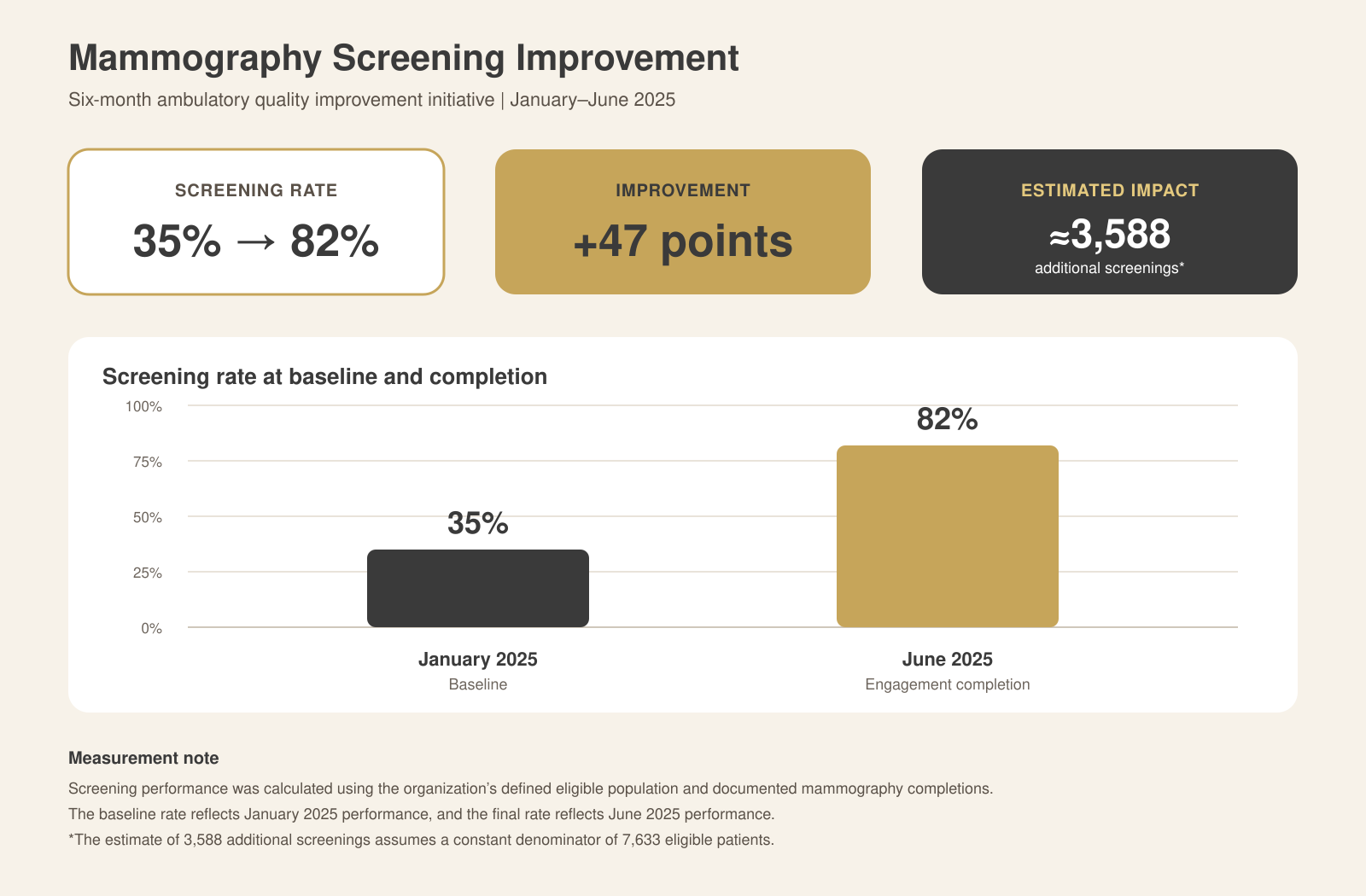
Ambulatory Quality Transformation Increases Mammography Screening by 47%
A New York-based health system with five ambulatory practices engaged CMAG to address declining mammography screening performance.
The Challenge
The organization’s mammography screening rate was 35% among 7,633 eligible patients. Differences in clinical workflows, inconsistent use of standing orders, fragmented outreach, limited performance visibility, patient concerns about pain, and delays in electronic health record reporting contributed to missed screenings. Because the five practices used different processes, leadership could not consistently identify care gaps, compare performance, or determine which interventions were producing results.
The organization needed a standardized approach that would improve screening access while building the internal capability to sustain performance. CMAG leadership coordinated a cross-functional quality improvement initiative involving primary care physicians, radiology, information technology, marketing, population health, practice operations, and quality improvement teams.
The Solution
1. Establish Centralized Performance Monitoring & Data Governance
CMAG partnered with information technology and quality leadership to implement a centralized, cloud-based performance dashboard that incorporated data from the five practices’ electronic health records. The dashboard provided visibility into mammography care gaps at the organizational, practice, provider, and patient levels. Weekly performance huddles were established to review results, assign responsibilities, escalate barriers, and monitor progress toward the screening target.
2. Redesign Clinical Workflows & Standing Orders
CMAG worked with clinical leadership to establish standardized standing orders and screening protocols across participating practices. Electronic alerts were configured to identify eligible patients due for mammography at the point of care. Workflow templates clarified the responsibilities of physicians, nurses, medical assistants, front-office staff, and population health teams. These changes reduced unnecessary appointments, limited variation between practices, and created a more direct pathway from care-gap identification to screening completion.
3. Implement Systematic Patient Outreach & Engagement
CMAG developed a coordinated outreach strategy that provided multiple opportunities to connect with eligible patients and address barriers.
EHR-generated patient letters
Secure patient portal messages
Telephone outreach campaigns
Community awareness events
Point-of-Care education addressing pain concerns, screening expectations, and the importance of early detection
CMAG also ran 8 rapid-cycle PDSA tests on standing orders, outreach strategies, and workflow redesign.
4. Strengthen Cross-Practice Learning & Best Practice Adoption
CMAG facilitated cross-practice performance reviews that allowed teams to compare results, identify high-performing workflows, and share lessons across locations. Successful practices shared outreach techniques, scheduling processes, and patient-education strategies with lower-performing sites. This peer-learning model helped accelerate the adoption of effective practices while creating shared accountability for organizational performance.
5. Build Internal QI Capability & Sustainability
CMAG partnered with information technology to resolve reporting delays and strengthen ongoing performance monitoring. Rather than creating long-term dependence on external consultants, CMAG trained practice quality improvement coordinators in:
PDSA methodology
Rapid-cycle workflow testing
Care-gap analysis
Performance tracking
Root-cause identification
The Impact
Operational Impact
The initiative established standardized screening workflows across five practices, improved visibility into care gaps, clarified staff responsibilities, and created a consistent process for patient outreach and performance monitoring.
Organizational Impact
Cross-practice learning replaced isolated improvement efforts with a coordinated performance strategy. Practices gained the ability to compare results, share successful approaches, and work toward common organizational goals. Teams were equipped to monitor care gaps, conduct PDSA cycles, evaluate interventions, and sustain improvements beyond the engagement period.
Financial Impact
Improved screening performance positioned the organization to qualify for payer quality incentives totaling over $400,000.
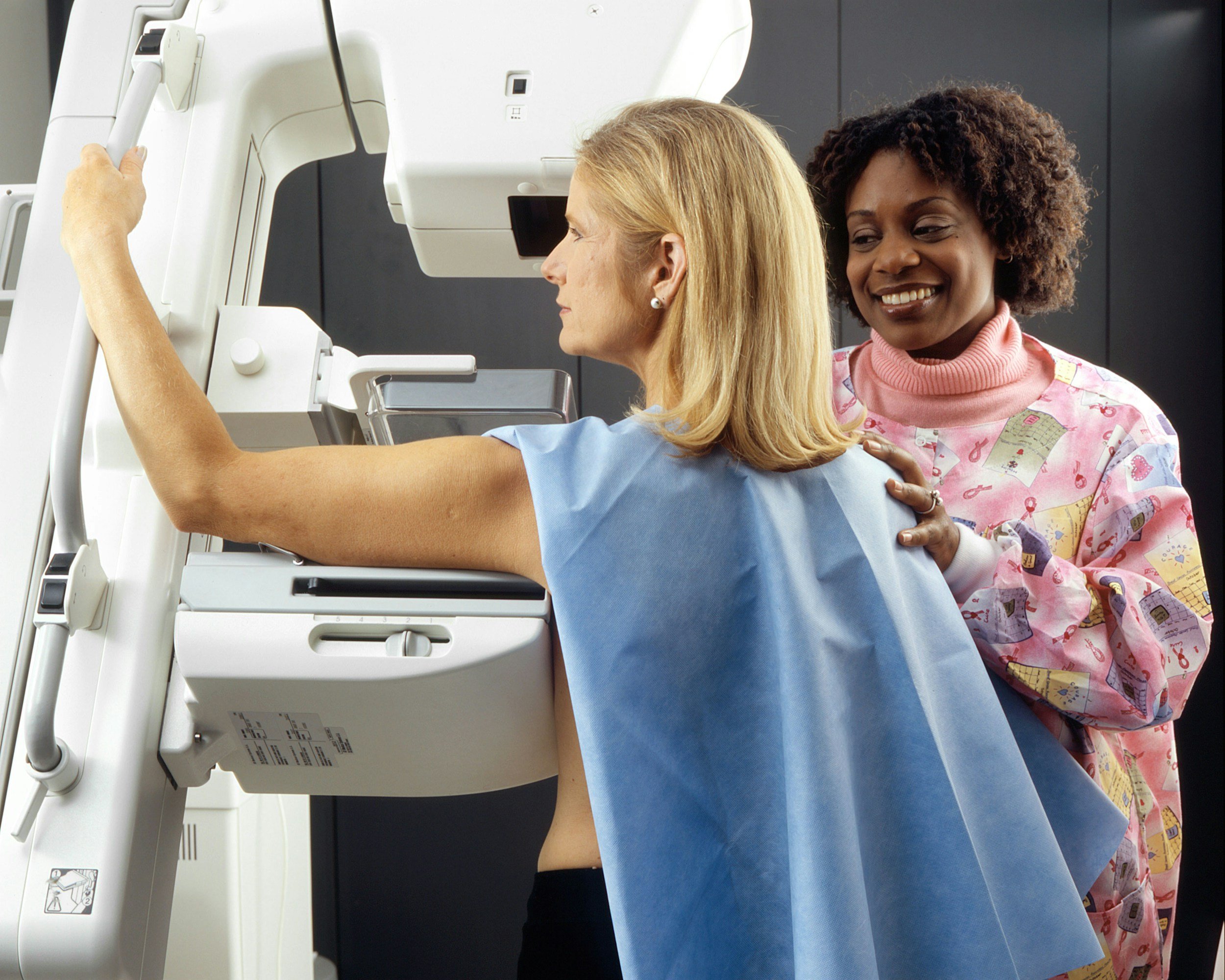
“Compared with no screening, mammography every two years for women ages 50–74 reduces breast cancer deaths by an estimated 26%, preventing approximately seven deaths for every 1,000 women screened.”
Key Takeaways
Standardization to Enable Scale
Standardizing workflows, responsibilities, and performance monitoring created a coordinated model that could be implemented across multiple locations.
Data Transparency to Drive Accountability
Centralized performance reporting allowed practices to understand their care gaps, compare results, and take action before performance barriers became persistent.
Multi-Level Patient Engagement
Combining telephone outreach, portal messaging, patient letters, point-of-care education, and community engagement provided more opportunities to reach eligible patients and address screening concerns
About this Case Study: Results are based on actual client outcomes. The organization’s name has been anonymized per client request. This case study reflects CMAG's approach to healthcare quality transformation, combining hands-on implementation, cross-functional coordination, and capability building.
Ready to Close Preventive-Care Gaps?
CMAG helps healthcare organizations identify care gaps, redesign clinical workflows and build sustainable quality-improvement capability.