
Quality Performance Transformation Generates More Than $2.2 Million in Quality Incentives
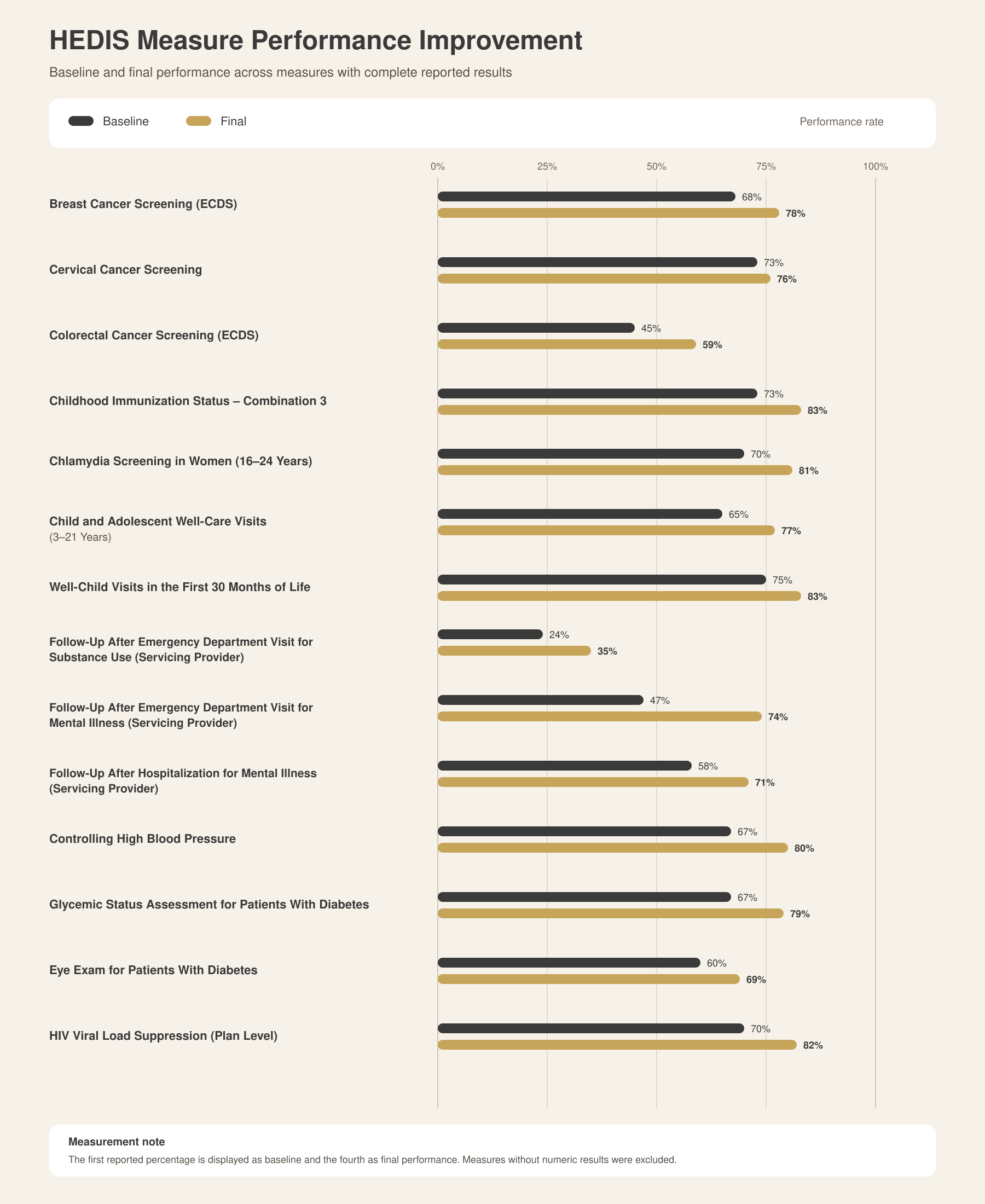
A New Jersey-based healthcare organization strengthened HEDIS performance, closed priority care gaps and earned more than $2.2 million in quality incentives within 12 months.
The Challenge
The organization participated in multiple value-based payer programs, each with different HEDIS measures, performance targets, reporting requirements and incentive structures.
Quality data was fragmented across payer reports, electronic health records and internal tracking tools. Clinical teams lacked consistent visibility into care gaps, while differences in workflows made it difficult to coordinate patient outreach and monitor progress across practices.
The organization needed a structured strategy that connected payer requirements with daily clinical operations and focused resources on the measures offering the greatest clinical and financial opportunity.
The Solution
CMAG leadership coordinated a 12-month quality-performance initiative across five areas:
1. Payer Measure Alignment
CMAG reviewed payer contracts, HEDIS specifications, performance targets and incentive opportunities. Requirements were organized into a centralized measure matrix that clarified priorities, deadlines and financial opportunities.
2. Performance Monitoring
Quality dashboards were developed to track performance by payer, measure, practice, provider and patient population. Regular performance reviews helped leaders identify gaps, assign responsibilities and intervene when progress fell behind target.
3. Care-Gap Workflow Redesign
CMAG worked with clinical and operational teams to integrate care-gap identification into pre-visit planning, point-of-care workflows and post-visit follow-up. Standardized workflows clarified responsibilities across physicians, nurses, medical assistants and population health teams.
4. Targeted Patient Outreach
Patient registries were used to identify individuals overdue for preventive services or chronic disease follow-up. Outreach included telephone campaigns, patient portal messages, mailed reminders and appointment coordination.
5. Data Validation and Sustainability
CMAG coordinated with information technology, payer and quality teams to reconcile reporting differences, validate measure performance and resolve documentation gaps. Internal teams were also trained to manage dashboards, analyze care gaps and sustain performance monitoring.
The Impact
Financial Impact
The organization earned more than $2.2 million in quality incentive payments through improved HEDIS performance and successful care-gap closure within 12 months.
Clinical Impact
More patients received recommended preventive services and chronic disease follow-up as care-gap identification, outreach and clinical workflows became more coordinated.
Operational Impact
The organization established a consistent process for translating payer requirements into measurable clinical actions. Leaders gained greater visibility into performance, and clinical teams received clearer guidance on their responsibilities.
Organizational Impact
Quality improvement became a coordinated clinical and financial strategy rather than a collection of disconnected payer initiatives. The organization strengthened its infrastructure for future value-based contracts and performance-based reimbursement.
“More than 235 million people are enrolled in health plans that report HEDIS results, making HEDIS one of healthcare’s most widely used performance-improvement tools”
Key Takeaways
Payer Requirements Must Be Operationalized
Contract requirements produce results only when they are translated into clear workflows, responsibilities and performance targets.
Data Visibility Drives Accountability
Centralized reporting allowed leaders and practices to understand performance gaps and take corrective action before payer deadlines.
Clinical Improvement Can Create Financial Value
Aligning quality improvement with payer incentives allowed the organization to improve patient care while strengthening financial performance.
About this Case Study: Results are based on actual client outcomes. The organization’s name has been anonymized per client request. This case study reflects CMAG's approach to healthcare quality transformation, combining hands-on implementation, cross-functional coordination, and capability building.
Ready to Close Preventive-Care Gaps?
CMAG helps healthcare organizations improve HEDIS measures, close care gaps and build the infrastructure required to succeed in value-based payer programs.