
Hospital-Wide Continuous Readiness Program Improves Compliance by 20% Across 15 Departments
South Jersey Community hospital strengthened regulatory compliance across 15 clinical and operational departments by replacing episodic survey preparation with a structured continuous readiness program..
The Challenge
The hospital’s regulatory-readiness activities were concentrated around upcoming surveys rather than integrated into routine operations. Departments used different methods to monitor compliance, maintain documentation and address identified deficiencies.
Leadership lacked a centralized view of regulatory risks, corrective actions and departmental readiness. Staff were also uncertain about survey expectations, tracer methodology and their individual responsibilities during a regulatory review.
The hospital needed a coordinated readiness structure that could standardize expectations, identify vulnerabilities earlier and sustain compliance beyond the survey period.
The Solution
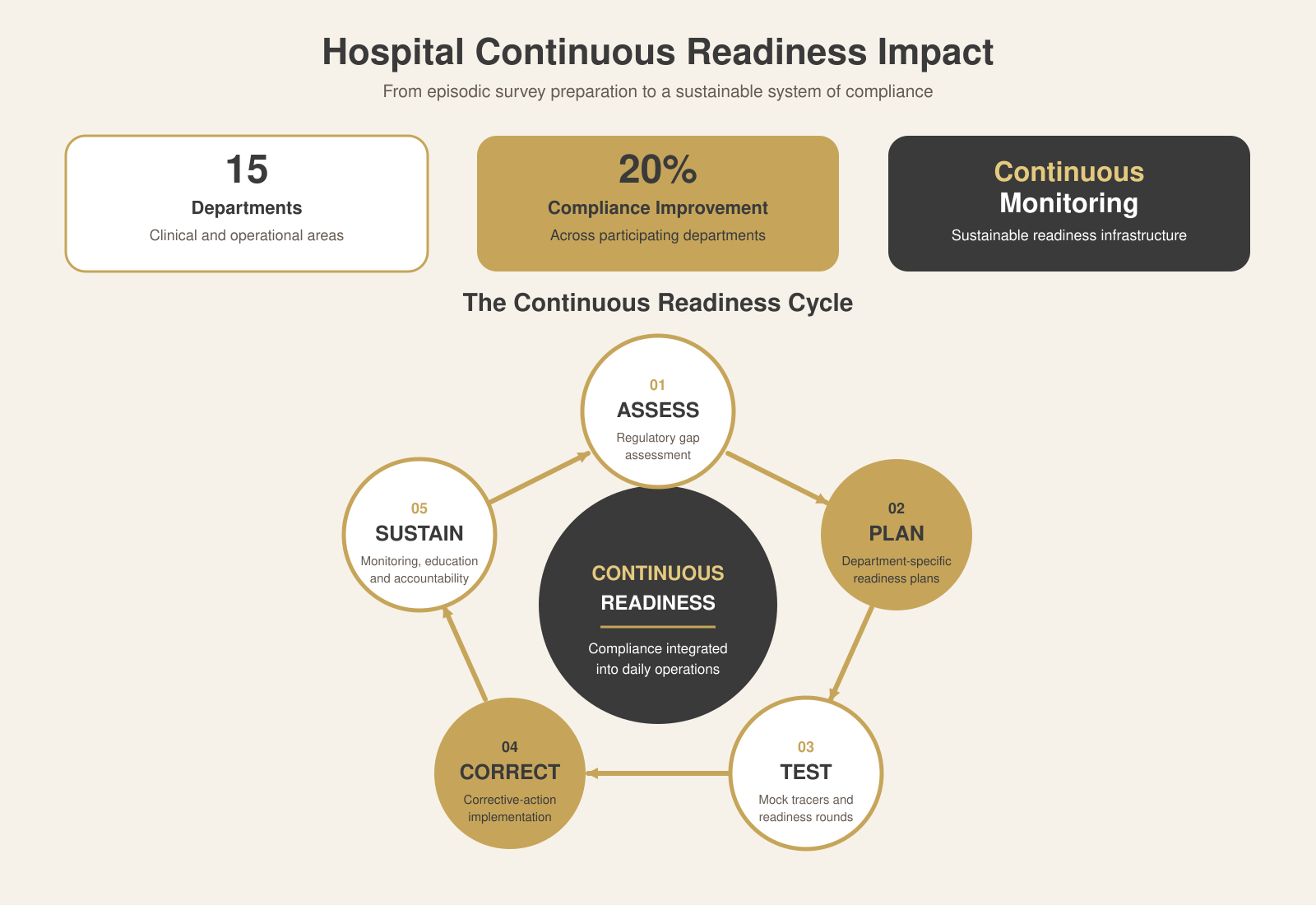
CMAG leadership coordinated a hospital-wide continuous readiness initiative across five areas:
1.Regulatory Gap Assessment
CMAG reviewed current policies, documentation, workflows and compliance practices against applicable Joint Commission standards and hospital requirements. Findings were prioritized according to patient-safety risk, regulatory exposure and operational impact.
2. Department-Specific Readiness Plans
Individual readiness plans were developed for 15 clinical and operational departments. Each plan identified applicable requirements, accountable leaders, corrective actions, completion dates and evidence needed to demonstrate compliance.
3. Mock Tracers and Readiness Rounds
CMAG conducted mock tracers and departmental readiness rounds to evaluate how policies were applied in daily practice. Findings were reviewed with department leaders, and deficiencies were converted into focused corrective-action plans.
4. Staff and Leadership Education
Department leaders and frontline staff received practical education on survey expectations, tracer methodology, documentation requirements and common areas of regulatory risk. Coaching helped staff explain their roles and demonstrate compliance confidently.
5. Performance Monitoring and Sustainability
A centralized readiness tracker was established to monitor findings, corrective actions, responsible owners and completion deadlines. Regular leadership reviews created accountability and helped prevent unresolved findings from carrying forward.
The Impact
Compliance Impact
The continuous readiness initiative contributed to a 20% improvement in regulatory compliance across 15 departments.
Operational Impact
The hospital established a consistent process for conducting readiness assessments, documenting findings, assigning corrective actions and monitoring completion. Departments gained clearer expectations and greater visibility into unresolved risks.
Workforce Impact
Staff developed a stronger understanding of regulatory requirements and how those requirements connected to daily patient-care and operational responsibilities.
Organizational Impact
Readiness became an ongoing management responsibility rather than a short-term response to an approaching survey. Hospital leadership gained a sustainable structure for identifying risks, maintaining documentation and reinforcing accountability throughout the organization.
“The Joint Commission evaluates more than 23,000 healthcare organizations and programs across the United States, making it the nation’s largest healthcare accrediting and standards-setting organization.”
Key Takeaways
Readiness Must Be ContinuousReadiness Must Be Continuous
Organizations that prepare only when a survey approaches may overlook risks that develop between review periods. Continuous monitoring helps identify and address vulnerabilities earlier.
Department-Level Accountability Matters
Clearly assigning findings, corrective actions and completion dates helped move regulatory readiness from the quality department into daily departmental operations.
Tracers Connect Policy With Practice
Mock tracers helped determine whether documented policies were consistently understood and followed at the point of care.
Visibility Supports Sustainability
Centralized reporting gave leaders a clear view of open findings, overdue actions and areas requiring additional support.
About this Case Study: Results are based on actual client outcomes. The organization’s name has been anonymized per client request. This case study reflects CMAG's approach to healthcare quality transformation, combining hands-on implementation, cross-functional coordination, and capability building.
Ready to Strengthen Continuous Readiness?
CMAG helps hospitals assess regulatory risks, prepare departments for surveys and build sustainable systems that support compliance throughout the year.